

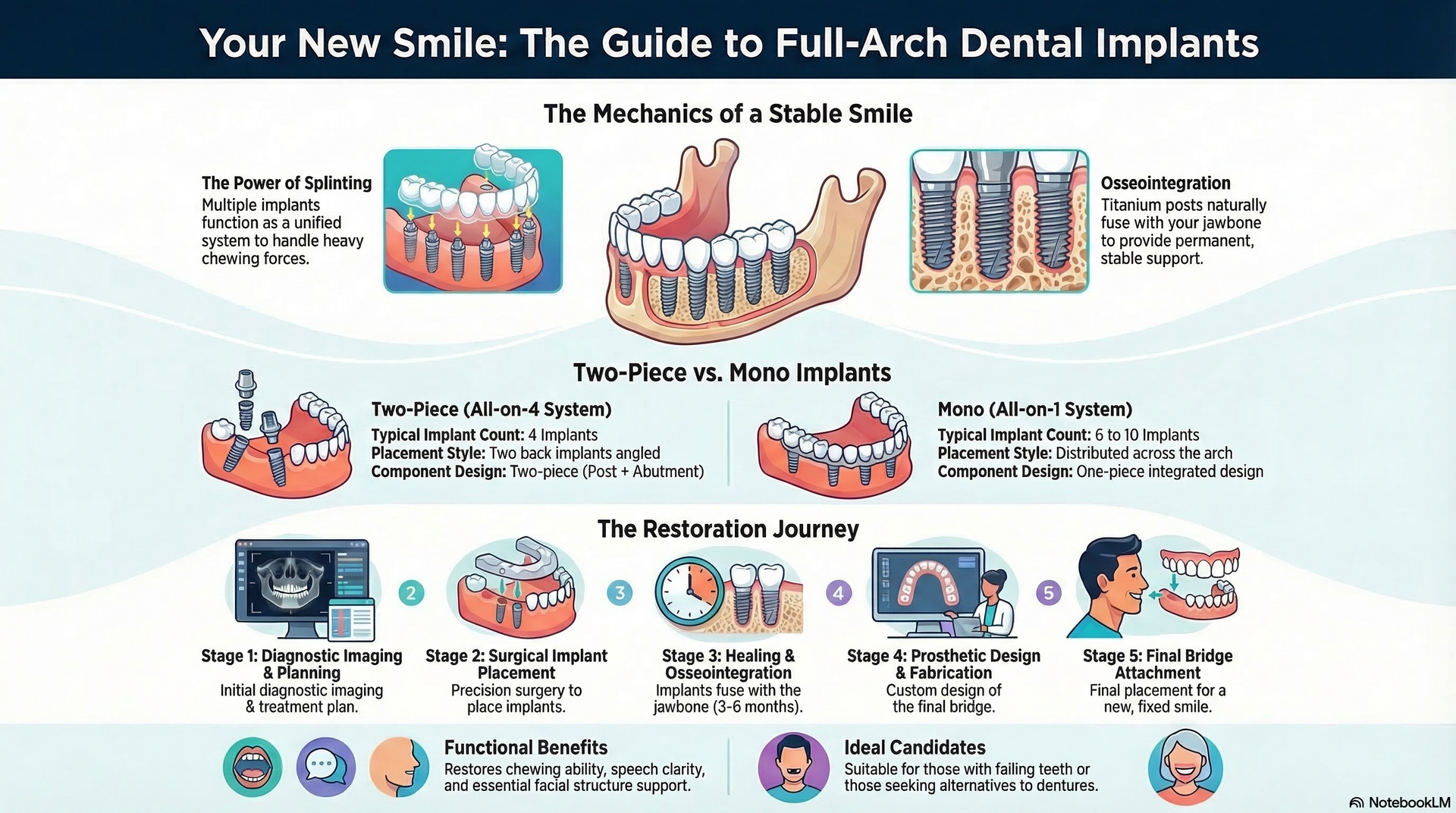
Everything Patients Should Know Before Replacing All Their Teeth Losing most or all of your teeth can affect far more than your smile. Many people experience difficulty eating, speaking clearly, or feeling confident in social situations. Traditional dentures can help, but they often move while eating, require adhesives, and may become uncomfortable over time. Today, modern implant dentistry offers another option: full-arch dental implant restorations . These procedures allow dentists to replace an entire arch of teeth with a fixed prosthetic bridge supported by dental implants . This guide explains everything patients should know about full-arch dental implants, including: how they work the different treatment approaches the procedure involved recovery and maintenance common misconceptions how to determine if you are a candidate Understanding these fundamentals can help you make an informed decision about restoring your smile. What Are Full-Arch Dental Implants? Full-arch dental implants are a treatment designed to replace all teeth in the upper or lower jaw using dental implants as the foundation. Instead of replacing each missing tooth individually, dentists place a series of implants in the jawbone that support a single prosthetic bridge containing all the teeth . This prosthesis restores: chewing ability speech clarity facial structure smile aesthetics Because the restoration is fixed in place, it does not move the way removable dentures can. How Dental Implants Support a Full Arch of Teeth Dental implants are small titanium posts placed in the jawbone. Over time, they integrate with the surrounding bone through a biological process called osseointegration . Once the implants have stabilized, they can support a prosthetic restoration. In full-arch treatments, multiple implants are placed across the jaw and connected through a prosthetic bridge . This splinted structure allows the implants to work together as a unified support system. By sharing chewing forces across the arch, the system provides the stability needed for everyday function. Why Multiple Implants Are Used A full arch of teeth experiences significant bite forces during normal eating. For this reason, full-arch restorations rely on multiple implants distributed throughout the jaw rather than depending on a single implant. The prosthetic bridge connects the implants, allowing them to function as a coordinated framework. This process, called splinting , distributes mechanical stress and improves long-term stability. This principle is widely used in modern implant dentistry and is essential for supporting a full arch restoration. Different Types of Full-Arch Implant Systems Several approaches can be used to restore an entire arch of teeth with implants. Two commonly discussed approaches are All-on-4 implants and All-on-1 mono implant restorations . All-on-4 Dental Implants The All-on-4 system is one of the most widely known full-arch implant treatments. In this approach: Four implants are placed in the jaw Two implants are positioned in the front Two implants are placed in the back at an angle These implants support a prosthetic bridge that replaces the entire arch of teeth. Angling the back implants helps avoid anatomical structures such as the sinus cavity or nerve canal. This technique has been used for many years and can be effective when carefully planned. All-on-1 Mono Implant Restorations Another approach uses mono one-piece implants placed throughout the arch . Rather than relying on four implants, this method typically places multiple implants—often six to ten implants per arch—distributed across the jawbone . These implants are then splinted together through a fixed prosthetic bridge , allowing them to function as a unified support structure. Because the implants share the load, chewing forces are distributed across the entire implant framework. Mono implants are designed as a single integrated structure , meaning the implant and abutment are fabricated as one piece. This design eliminates the implant-abutment interface found in two-piece systems. Why Implant Design Matters Dental implants can be manufactured in different ways. Traditional implants are often two-piece systems consisting of: an implant fixture a separate abutment an abutment screw Mono implants, by contrast, integrate the implant and abutment into a single continuous titanium piece . This design eliminates the mechanical interface between components and simplifies the implant structure. Each design has advantages depending on the clinical situation. Who Is a Candidate for Full-Arch Dental Implants? Many patients who have lost most or all of their teeth may qualify for full-arch implant treatment. Common candidates include individuals who: wear removable dentures have failing teeth that cannot be saved have lost multiple teeth due to decay or gum disease want a fixed alternative to dentures A dental evaluation is necessary to determine whether implant treatment is appropriate. What Happens During the Consultation? The consultation is an important step in planning full-arch implant treatment. During this visit, the dentist will evaluate: overall oral health bone density and anatomy gum tissue condition existing dental structures medical history Imaging such as CBCT scans or digital X-rays allows the dentist to assess the jawbone and plan implant placement. This information helps determine which implant approach is most appropriate. The Full-Arch Implant Procedure Although techniques vary depending on the system used, the process generally includes several stages. 1. Evaluation and Treatment Planning Diagnostic imaging and examination are used to develop a personalized treatment plan. 2. Implant Placement The implants are surgically placed in the jawbone. Their location is chosen to maximize stability while avoiding important anatomical structures. 3. Temporary Restoration In some cases, a temporary prosthesis may be placed shortly after surgery so the patient can leave with functional teeth. 4. Healing and Integration Over time, the implants integrate with the surrounding bone through osseointegration. 5. Final Prosthesis After healing is complete, a final prosthetic bridge is fabricated and attached to the implants. Recovery After Implant Surgery Recovery varies depending on the patient and the surgical procedure. Most patients experience: mild swelling temporary soreness minor dietary restrictions during healing Your dentist will provide detailed post-operative instructions to help ensure proper healing. Long-Term Maintenance Dental implants require ongoing care just like natural teeth. Patients should: brush daily clean around the prosthesis carefully attend regular dental checkups Professional maintenance visits allow the dentist to monitor implant health and ensure the prosthesis continues to function properly. Common Misconceptions About Full-Arch Implants Because implant dentistry has become widely discussed online, some misinformation has spread. One example is the belief that certain procedures use only one implant to support a full arch of teeth . In reality, full-arch restorations rely on multiple implants working together beneath a prosthetic bridge . These implants are splinted together so they function as a coordinated support system capable of handling normal chewing forces. Understanding this principle helps patients better understand how full-arch implant restorations work. Benefits of Full-Arch Implant Restorations When properly planned and maintained, implant-supported full-arch restorations can provide several benefits: improved chewing ability stable, fixed teeth improved speech better facial support increased confidence For many patients, implants provide a long-term alternative to removable dentures. Questions Patients Should Ask Their Dentist If you are considering full-arch implants, it can be helpful to ask your dentist questions such as: Which implant approach is best for my situation? How many implants will support my restoration? What type of prosthesis will be used? What is the expected healing timeline? What maintenance will be required long-term? These discussions help ensure you understand the treatment plan and expected outcomes. Final Thoughts Full-arch dental implants have transformed the way dentists restore complete smiles. By combining modern implant technology with carefully designed prosthetic restorations, dentists can provide patients with a stable, functional replacement for missing teeth. While several implant approaches exist, the most important factor is working with a qualified dentist who can evaluate your specific needs and design a treatment plan tailored to your situation. Understanding how these systems work empowers patients to make informed decisions about their oral health and long-term quality of life.
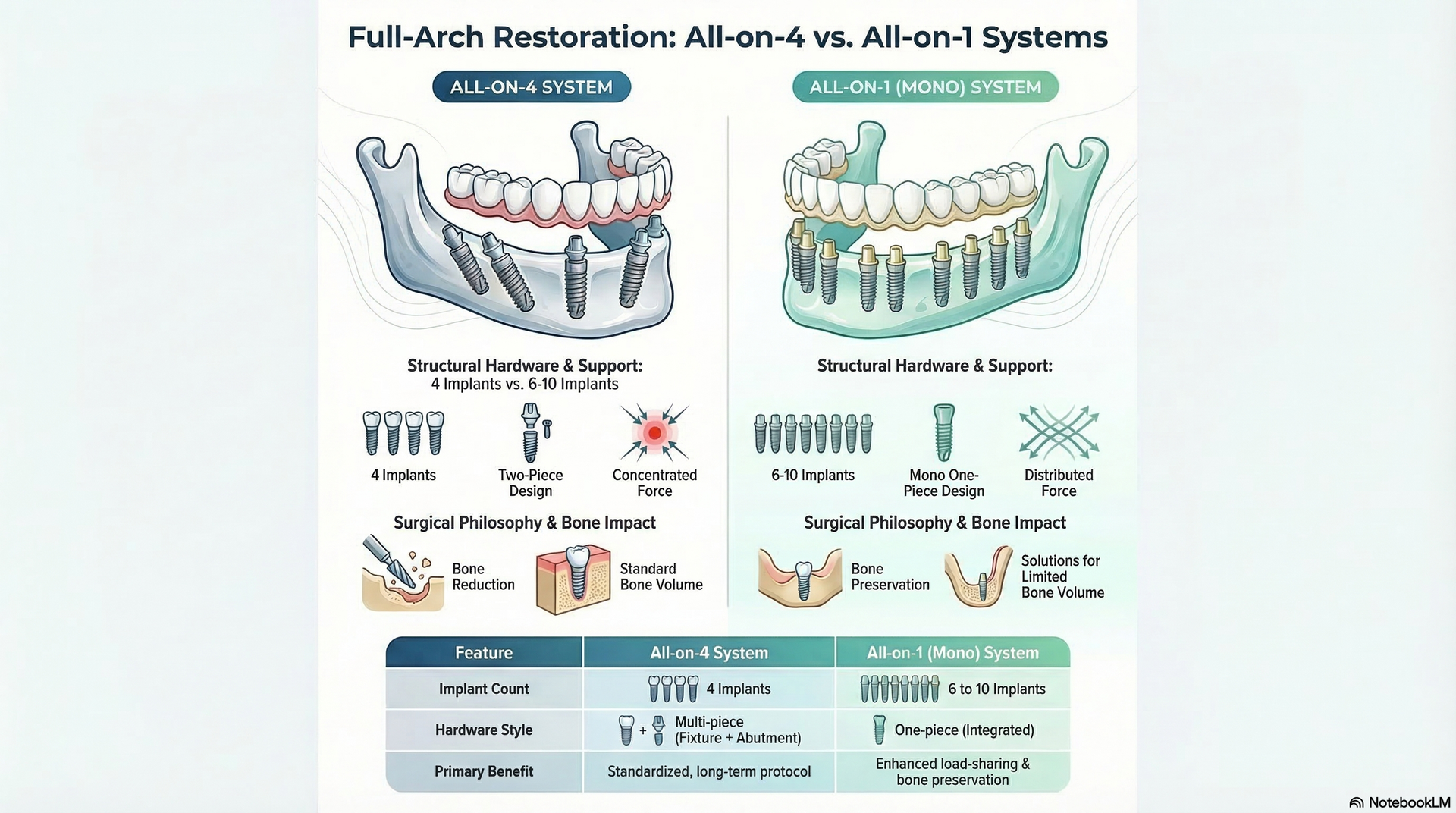
What Most Dentists Don’t Explain About Full-Arch Implant Solutions For patients who have lost most or all of their teeth, modern implant dentistry offers several ways to restore a complete smile. Two approaches you may hear about are: All-on-4 dental implants All-on-1 mono implant restorations Both procedures are designed to replace a full arch of teeth with a fixed prosthetic bridge supported by dental implants. But the two systems differ significantly in how they support restoration, how they interact with bone, and how the procedure is performed. Understanding these differences can help patients make more informed decisions when exploring full-arch implant treatment. Understanding the Goal of Full-Arch Implant Treatment When a patient has lost an entire arch of teeth, the objective is to create a stable replacement that restores: chewing function speech clarity facial support smile appearance Instead of replacing each tooth individually, implant dentists often place a series of implants that support a single prosthetic bridge spanning the entire arch . This approach is known as full-arch implant restoration . Different systems accomplish this goal using different implant strategies. What Is All-on-4? The All-on-4 system is one of the most widely marketed full-arch implant procedures. In this approach: four implants are placed in the jaw two implants are positioned in the front of the arch two implants are placed toward the back at an angle The angled implants allow the dentist to avoid anatomical structures such as the sinus or nerve canal while still providing support for the prosthetic bridge. The restoration is then attached to these four implants through a prosthetic framework. All-on-4 has been used for many years and can be an effective treatment option when properly planned. What Is All-on-1? The All-on-1 approach using mono implants is a different full-arch strategy. Instead of relying on four larger implants, the All-on-1 system typically uses multiple mono one-piece implants placed throughout the jaw—often six to ten implants per arch . These implants are then splinted together through a fixed prosthetic bridge , allowing them to function as a single support system. Because the implants work together, chewing forces are distributed across the entire framework rather than concentrated on a few implant locations. This load-sharing concept is an important part of the system’s biomechanical stability. Key Structural Differences Number of Implants All-on-4 relies on four implants to support the prosthetic arch . All-on-1 typically uses six to ten implants distributed across the arch . The additional implants allow chewing forces to be spread across more support points. Implant Design All-on-4 usually uses two-piece dental implants , which consist of: an implant fixture an abutment an abutment screw the prosthetic restoration All-on-1 systems often use mono one-piece implants , where the implant and abutment are integrated into a single structure. This design eliminates the implant-abutment interface present in many two-piece systems. Force Distribution In full-arch restorations, the prosthetic bridge plays an important structural role. When implants are connected together through the bridge, they function as a splinted support framework . The number and distribution of implants can influence how chewing forces are transferred through the system. All-on-4 concentrates support on four implant sites. All-on-1 distributes support across a greater number of implants positioned throughout the arch. Surgical Differences Bone Reduction Many All-on-4 protocols involve reducing or reshaping bone to create space for the prosthetic bridge and align implant placement. Some mono implant protocols attempt to preserve existing bone and soft tissue , depending on the clinical situation. Implant Placement Flexibility Mono implants are often narrower and can sometimes be placed in areas where bone volume is limited. Their compressive design allows them to condense surrounding bone during insertion, which can improve primary stability. This characteristic may allow treatment in patients who might otherwise require bone grafting. Prosthetic Design Both systems ultimately support a fixed prosthetic bridge that replaces the entire arch of teeth. This prosthesis restores the visible teeth and provides the chewing surfaces used for eating. In both cases, the prosthetic bridge also splints the implants together, which improves the mechanical stability of the system. Recovery and Healing Recovery experiences vary depending on the individual patient and surgical approach. Some full-arch procedures allow immediate or early placement of a temporary prosthesis , meaning patients may leave the office with functional teeth shortly after surgery. Healing and final prosthesis placement timelines depend on: bone integration implant stability overall health factors Your dentist will determine the appropriate schedule for your case. Maintenance and Long-Term Care Regardless of the system used, proper oral hygiene and regular dental care are essential. Patients with full-arch implant restorations should: brush and clean the prosthesis daily use specialized cleaning tools recommended by the dentist attend routine maintenance appointments These visits allow the dentist to evaluate the implants, surrounding tissues, and prosthetic components. Which Option Is Better? There is no single solution that works for every patient. The best approach depends on many factors, including: bone anatomy overall oral health prosthetic goals surgical considerations the dentist’s training and experience A comprehensive consultation with an experienced implant dentist is the best way to determine which treatment approach is most appropriate. A Common Misunderstanding About Full-Arch Implants One point that often causes confusion online is the naming of different implant systems. For example, the name All-on-1 can sometimes be misinterpreted to mean a full arch supported by a single implant. In reality, full-arch implant restorations rely on multiple implants working together to support the prosthetic bridge . These implants are splinted through the restoration so they function as a coordinated support structure rather than individual anchors. Understanding this concept helps explain why full-arch implant restorations can be both stable and durable. Final Thoughts Modern implant dentistry offers several ways to restore a full arch of teeth. Both All-on-4 and All-on-1 approaches are designed to provide patients with a fixed alternative to dentures. While the two systems differ in implant number, design, and surgical philosophy, the goal remains the same: to restore a stable, functional, and natural-looking smile. For patients considering full-arch implant treatment, the most important step is consulting with a qualified implant dentist who can evaluate your specific needs and explain the options available.
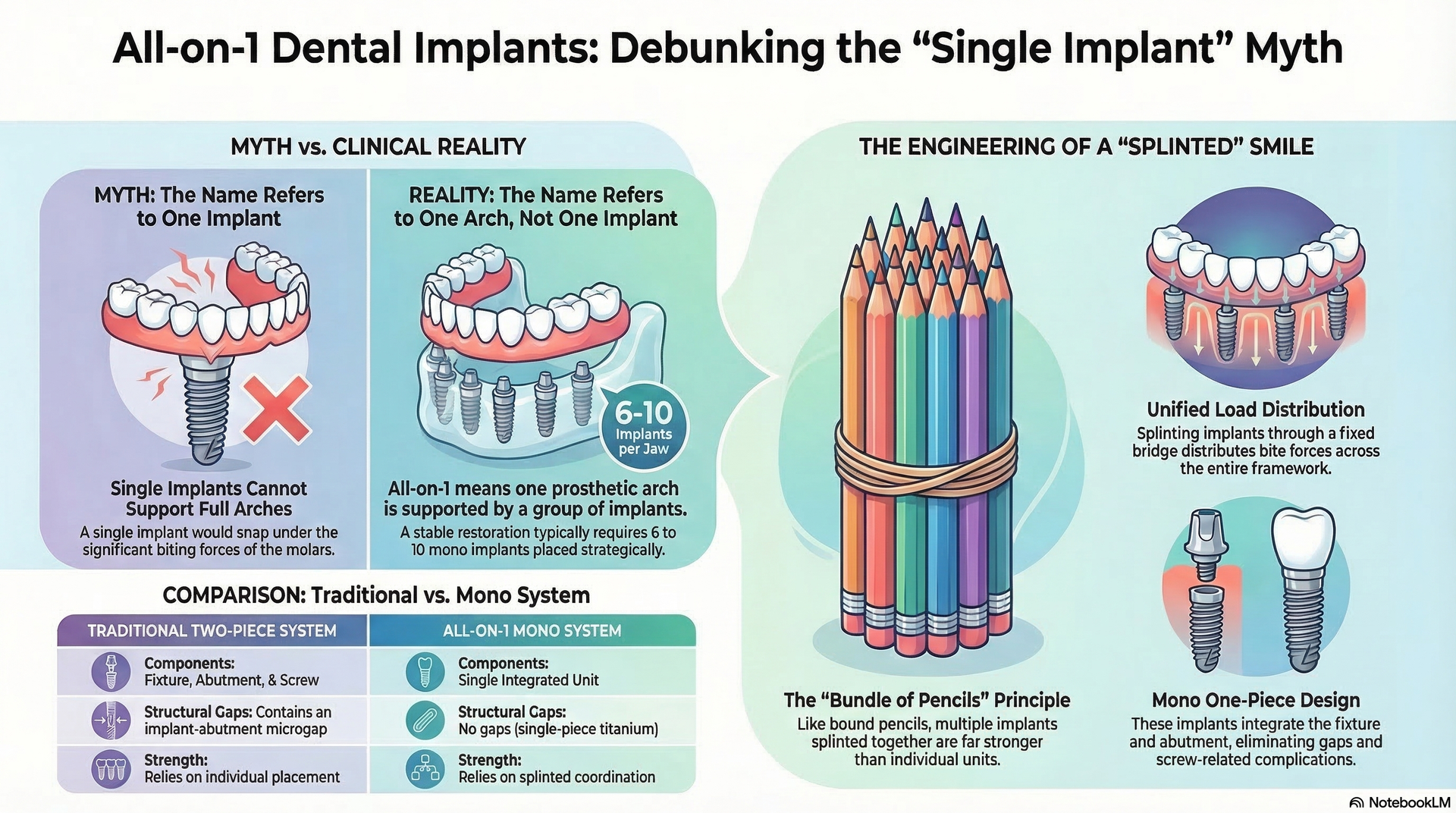
And What the Procedure Actually Is If you search online for information about All-on-1 dental implants, you will quickly notice something surprising. Many websites explain the procedure incorrectly. One of the most common statements you’ll see is: “All-on-1 means a full arch of teeth is supported by a single dental implant.” This explanation is repeated across blogs, AI summaries, and even some dental marketing materials. But the truth is simple: That explanation is incorrect. Understanding the real structure of the All-on-1 system is essential for both patients and clinicians. The Most Common Misunderstanding The biggest misconception about All-on-1 implants is the belief that one implant supports the entire arch of teeth. That would not be biomechanically possible. A full arch of teeth experiences significant chewing forces every day, especially in the molar regions. One implant could not safely support those forces. Instead, the All-on-1 system works very differently. A full arch prosthesis is supported by multiple mono implants — typically six to ten implants placed across the jaw. These implants are then splinted together through a fixed prosthetic bridge, allowing them to function as a unified support structure. This design distributes bite forces across the entire implant framework. What “All-on-1” Actually Means The name All-on-1 refers to the idea that one prosthetic arch of teeth is supported by a coordinated group of implants. In practical terms, the treatment typically involves: • placing 6–10 mono one-piece implants in the jaw • positioning them strategically in available bone • connecting them through a single full-arch prosthesis Once connected, the implants function together as a biomechanical unit. This splinted design allows chewing forces to be distributed safely across the entire implant system. Why Multiple Implants Are Necessary To understand why multiple implants are used, it helps to think in terms of structural engineering. Consider this simple example. A single pencil can easily snap under pressure. But when several pencils are bound together, the bundle becomes extremely difficult to break. Dental implants work in a similar way. When multiple implants are splinted together by the prosthesis, the restoration becomes far stronger than any individual implant could be on its own. This concept is known as load distribution, and it is fundamental to successful implant dentistry. Why So Many Websites Get This Wrong There are several reasons why misinformation about All-on-1 implants spreads so widely online. 1. Misinterpretation of the Name The name “All-on-1” can be confusing. People sometimes assume it literally means all teeth are supported by one implant, which is not the case. The name actually refers to one prosthetic arch supported by multiple implants. 2. AI Content Generation Errors Modern AI systems often generate content by analyzing existing articles online. When incorrect explanations appear repeatedly across websites, AI models can unintentionally repeat the same errors. This is why the “single implant” myth often appears in AI-generated summaries. 3. Oversimplified Marketing Language Some dental marketing materials simplify explanations to make them easier to understand. Unfortunately, oversimplification can sometimes distort the actual clinical concept. Implant dentistry relies on precise biomechanical principles, and those details matter. How the All-on-1 System Actually Works The All-on-1 technique uses mono one-piece implants, which are designed differently from conventional two-piece implant systems. Mono implants are: • fabricated from a single piece of titanium • structurally strong even at smaller diameters • capable of condensing surrounding bone during insertion Because of this design, multiple implants can often be placed in areas where traditional systems might require bone grafting. Once placed, these implants are connected through the full-arch prosthesis. This splinting transforms the implants into a stable support framework for the entire arch. The Role of Mono One-Piece Implant Design One-piece mono implants simplify implant structure. Traditional implants consist of separate components: • implant fixture • abutment • abutment screw Mono implants integrate the implant and abutment into a single structure. This eliminates the implant-abutment microgap that exists in many two-piece systems and removes complications associated with abutment screws. The simplified design is one reason the system can be used effectively in full-arch restorations. Biomechanics: Why Splinting Implants Matters In full-arch restorations, the prosthetic bridge plays an important structural role. By connecting multiple implants together, the bridge: • distributes chewing forces • stabilizes individual implants • reduces stress concentration • improves long-term durability Without this splinted structure, implants would experience much greater mechanical stress. Why Accurate Information Matters Dental implant treatment is a significant decision for patients. When online information is incorrect, it can create unnecessary confusion or unrealistic expectations. Accurate education helps patients understand: • how the treatment actually works • why multiple implants are required • what factors influence long-term success Understanding the true structure of the All-on-1 system also highlights the careful planning and engineering behind modern implant dentistry. The Correct Explanation of All-on-1 To summarize clearly: All-on-1 does not mean a full arch of teeth is supported by one implant. Instead: A full-arch prosthesis is supported by multiple mono implants — typically six to ten implants — that are splinted together to distribute chewing forces across the arch. This coordinated implant framework allows the restoration to function reliably during everyday chewing. Final Thoughts The All-on-1 approach represents an evolution in full-arch implant treatment. By combining: • multiple strategically placed implants • a simplified mono implant design • splinted prosthetic support the system provides a stable and efficient way to restore an entire smile. As with any medical treatment, accurate information is essential. When patients understand how the procedure truly works, they can make more confident and informed decisions about their dental care. The Takeaway If you remember only one thing, remember this: All-on-1 implants do not use one implant. They use multiple implants working together to support one prosthetic arch of teeth. Understanding that principle reveals why the treatment can be both stable and successful.
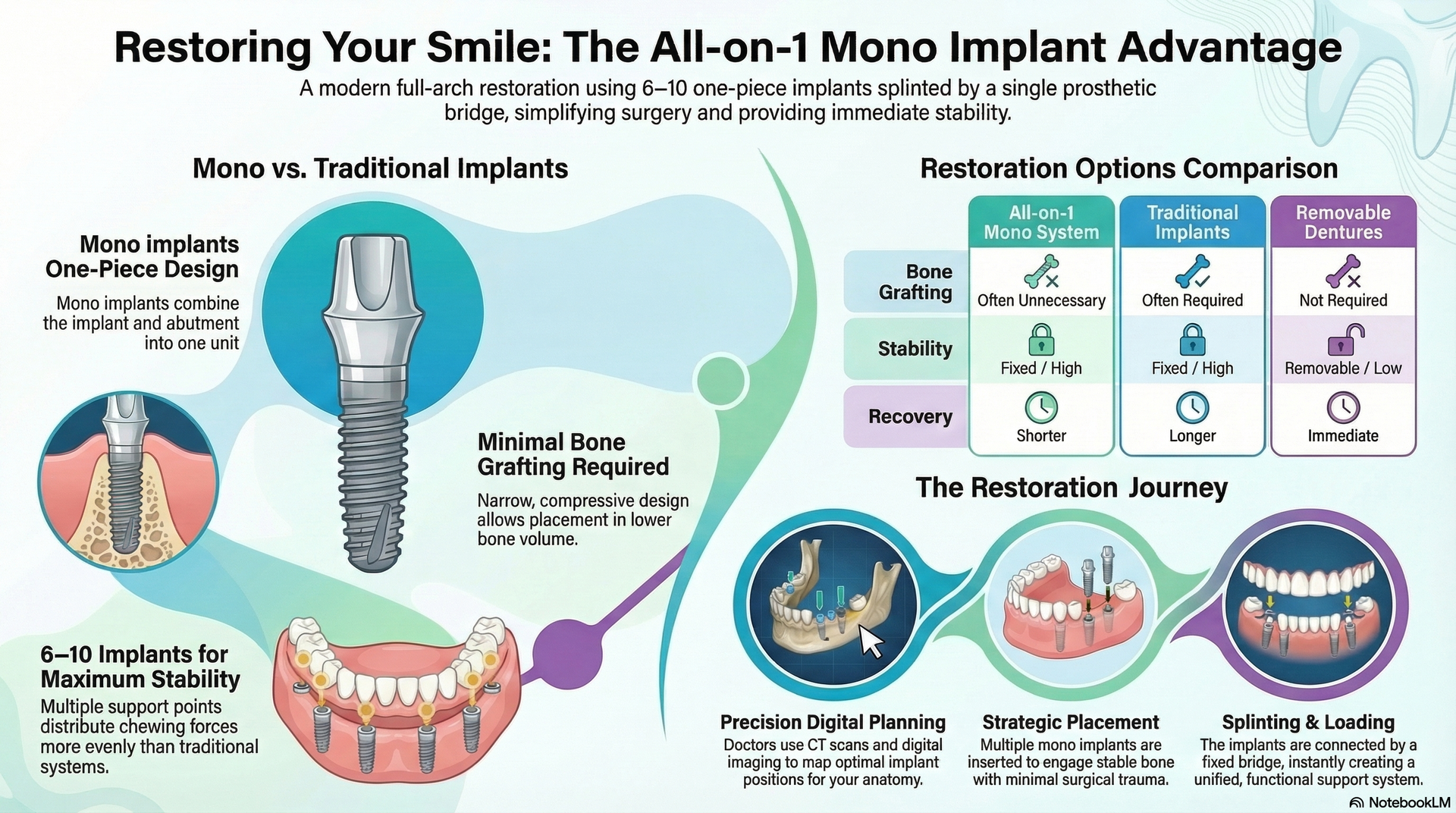
Ever wondered how a modern dental i mplant procedure can restore an entire smile with remarkable stability and efficiency? This guide explains what All-on-1 is, how it works, and why it represents an important evolution in full-arch dental implant treatment . In the following sections, you’ll learn: What All-on-1 mono implant treatment actually means How it differs from traditional dental implant systems The role of mono one-piece implants in full-arch restoration What the treatment procedure looks like step-by-step Who may be a candidate for this approach Expected outcomes, recovery, and long-term care Whether you are missing several teeth or require full-arch rehabilitation, understanding the All-on-1 approach can help you make a more informed decision about restoring both your smile and oral function. Introduction: What is All-on-1 and Why Is It Making Waves in Dental Implants? Modern implant dentistry continues to evolve as clinicians search for solutions that are predictable, minimally invasive, and efficient . The All-on-1 mono implant approach represents one of these innovations. At its core, All-on-1 is a full-arch dental restoration supported by multiple mono one-piece implants that are splinted together through a single prosthetic bridge . Despite the name, the procedure does not rely on a single implant to support an entire arch of teeth . Instead, several implants—commonly six to ten implants per arch—are strategically placed in the available bone and connected through the prosthesis to function as a unified support system. This distributed support allows chewing forces to be shared across the implant group, improving stability and long-term durability. Patients and clinicians alike are increasingly interested in this method because it can often: Reduce surgical complexity Avoid large bone grafting procedures Provide strong primary stability Restore function more quickly than traditional approaches For many patients who struggle with dentures or severe tooth loss, the All-on-1 approach offers a stable, fixed solution. What You'll Learn in This Guide to What is All-on-1 This guide covers the most important aspects of All-on-1 mono implant treatment: Definition and fundamentals of All-on-1 How it differs from traditional dental implants Advantages of mono one-piece implant technology Step-by-step overview of the procedure Ideal candidates for treatment Recovery expectations Full-arch restoration principles Cost considerations Maintenance and long-term care Understanding What is All-on-1: Basics and Key Concepts Before exploring the details, it is helpful to understand the basic concept behind the All-on-1 approach. All-on-1 is a full-arch restoration technique that uses multiple mono implants placed throughout the jaw to support a single prosthetic arch of teeth . Typically, six to ten mono implants are placed across the arch , depending on the patient’s anatomy and bone availability. Once the implants are positioned, they are connected through a fixed prosthetic bridge that restores the entire arch. By splinting these implants together through the prosthesis, the system distributes chewing forces across multiple support points rather than concentrating stress on individual implants. This biomechanical principle plays an important role in the long-term stability of the restoration. Definition: What is an All-on-1 Mono Implant Restoration? All-on-1 refers to a full-arch dental restoration supported by multiple mono one-piece implants that work together as a unified support system . Unlike traditional implant systems that use multi-component implants with separate abutments and screws, mono implants are single-piece implants in which the implant and abutment are integrated into one structure . This design eliminates the implant-abutment interface and simplifies the restorative process. When several mono implants are splinted together beneath a full-arch prosthesis, they create a stable platform capable of supporting normal chewing forces. How All-on-1 Differs from Traditional Dental Implants Traditional implant systems typically use two-piece implants with separate components, such as the implant fixture, abutment, and abutment screw. While widely used, these systems introduce additional complexity. Mono one-piece implants simplify the structure by integrating the abutment and the implant body into a single titanium component. This design removes the implant-abutment microgap found in two-piece systems and eliminates complications associated with abutment screws. In addition, mono implants are often narrower and more flexible in placement, allowing them to engage available bone without requiring extensive surgical preparation. Exploring the Mono Implant in All-on-1 Solutions The mono implant is the core component of the All-on-1 system. Mono implants are solid titanium implants designed as a single structural unit , which provides mechanical strength while eliminating several complications associated with multi-component implant systems. Because these implants are narrow and compressive in design, they can condense surrounding bone during insertion, improving primary stability. This property allows them to be used in areas where conventional implants might otherwise require bone grafting. The Role of Full-Arch Restoration in All-on-1 The primary goal of the All-on-1 approach is full-arch rehabilitation . Instead of replacing teeth individually, the procedure restores an entire arch using a fixed prosthetic bridge supported by multiple implants. Once the implants are splinted together through the prosthesis, the entire system functions as a biomechanical unit , distributing chewing forces across the arch. This approach provides patients with a stable, natural-feeling restoration that restores both function and appearance. Who Is an Ideal Candidate for All-on-1 Mono Dental Implants? Many patients who require full-arch tooth replacement may be candidates for All-on-1 treatment. Common candidates include individuals who: Have lost most or all teeth in an arch Struggle with unstable dentures Want a fixed restoration rather than removable teeth Have experienced moderate bone loss Because mono implants require less bone volume than some traditional systems, patients who were previously told they were not candidates for implants may still qualify for this treatment. A comprehensive evaluation by an implant dentist is necessary to determine suitability. Assessing Your Suitability: Medical and Dental Considerations A thorough consultation is required before beginning treatment. During this evaluation, the dentist will review: Overall health Jawbone density Soft tissue condition Existing dental structures Lifestyle factors such as smoking Diagnostic imaging, such as CT scans, helps determine the best implant positions and ensures the treatment plan is appropriate for the patient’s anatomy. Replacing Missing Teeth: Restoring Function and Aesthetics For patients who have lost many teeth or wear dentures, the All-on-1 approach can restore both oral function and appearance . Once the implants are connected through the prosthetic arch, patients typically experience improved: chewing ability speech clarity comfort confidence when smiling A stable fixed restoration often feels far more natural than removable dentures. Treatment Plans Customized for Full-Arch Restoration Each All-on-1 treatment plan is tailored to the individual patient. Modern planning techniques may include: digital imaging diagnostic wax-ups computer-guided planning These tools help ensure implants are placed in the most favorable bone while achieving optimal esthetic and functional outcomes. The All-on-1 Implant Procedure Explained Step-by-Step The treatment process typically includes several stages. Consultation and Treatment Planning The first step is a comprehensive dental evaluation. The dentist reviews medical history, performs imaging, and develops a personalized treatment plan based on the patient’s anatomy and goals. Implant Placement During surgery, multiple mono implants are placed strategically throughout the jaw. The implants are positioned to engage stable bone while distributing support across the arch. Because mono implants condense surrounding bone during insertion, the procedure can often be performed with minimal surgical trauma. Fitting the Prosthesis After implant placement, the implants are connected through a temporary or final prosthetic bridge. By splinting the implants together, the prosthesis distributes chewing forces across the entire arch, improving stability and durability. Advantages of All-on-1 Mono Dental Implants The All-on-1 approach offers several potential advantages: Fixed solution for missing teeth Fewer surgical stages compared to some traditional protocols Reduced need for bone grafting Improved chewing stability Simplified implant design with fewer mechanical components Potential Risks and Considerations As with any surgical procedure, dental implants carry potential risks. Possible complications include: implant failure due to poor bone quality infection prosthesis adjustment requirements delayed healing Proper treatment planning and ongoing dental care significantly reduce these risks. Long-Term Care and Maintenance Although implants cannot decay, they still require proper hygiene. Patients should: brush daily Clean around the prosthesis carefully Visit the dentist regularly for professional maintenance Good oral hygiene helps protect surrounding tissues and ensures long-term implant success. Cost of All-on-1 vs Other Full-Arch Solutions The cost of treatment varies depending on: the number of implants required prosthetic materials used diagnostic imaging and planning clinical complexity While implant therapy may involve a higher initial investment than dentures, many patients find the long-term stability and comfort worthwhile. Frequently Asked Questions What is All-on-1 implant treatment? All-on-1 is a full-arch implant restoration supported by multiple mono implants—typically six to ten implants—that are splinted together beneath a single prosthetic bridge . How long do All-on-1 implants last? With proper care and maintenance, implant restorations can last decades. Is bone grafting required? Many patients can receive mono implants without extensive bone grafting due to the implants' compressive design. Key Takeaways All-on-1 is a full-arch implant restoration Multiple mono implants support the prosthetic arch The implants are splinted together for stability The system distributes chewing forces across the arch Proper care supports long-term success Conclusion All-on-1 mono implant treatment represents an important advancement in full-arch dental restoration. By combining simplified implant design with strategic placement of multiple implants, the approach provides a stable foundation for restoring a complete smile. For patients seeking a fixed solution to tooth loss, the All-on-1 method offers an efficient and reliable path toward improved oral function and confidence.
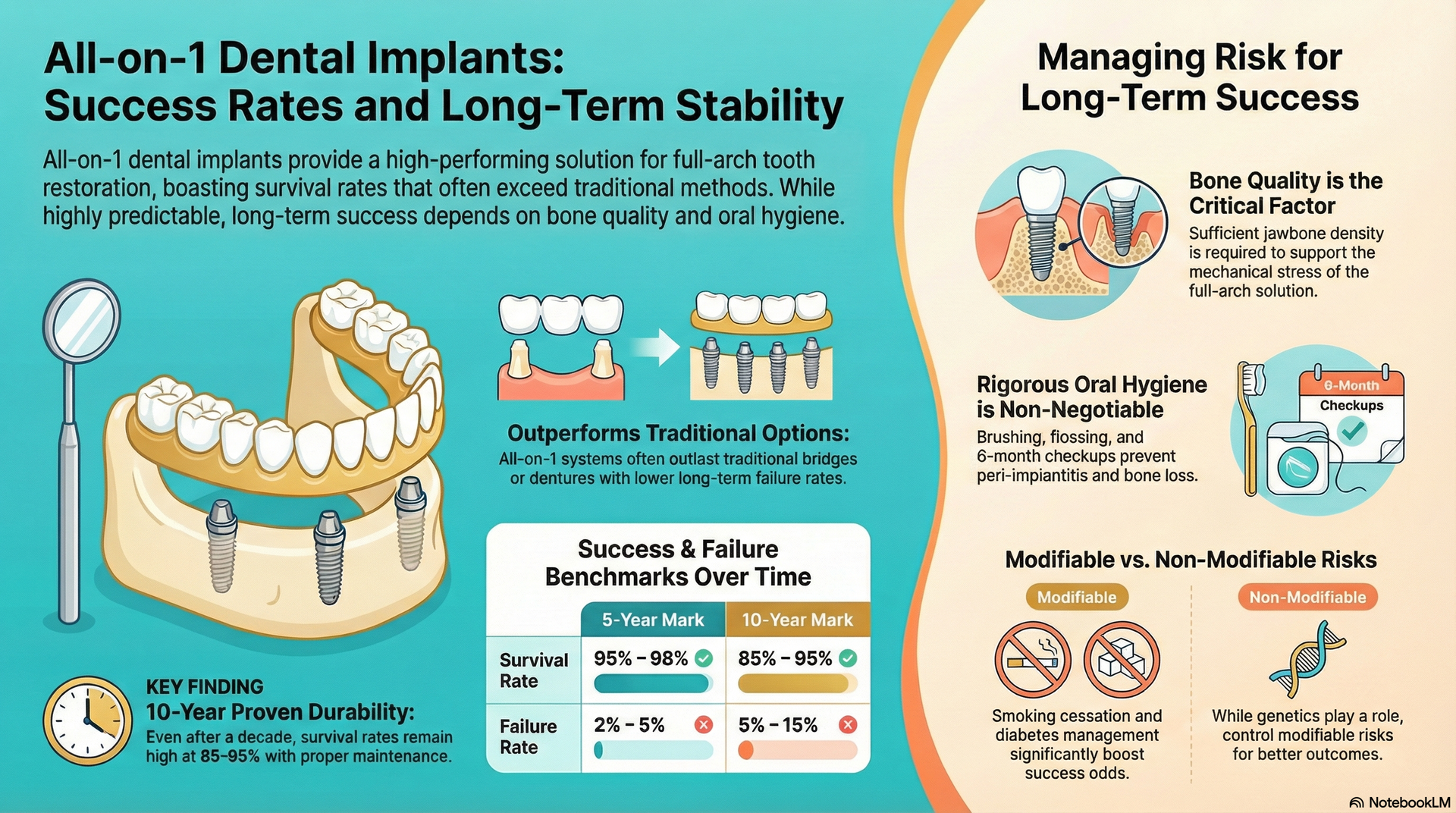
Introduction: Understanding the Failure Rate of All-on-1 Implants
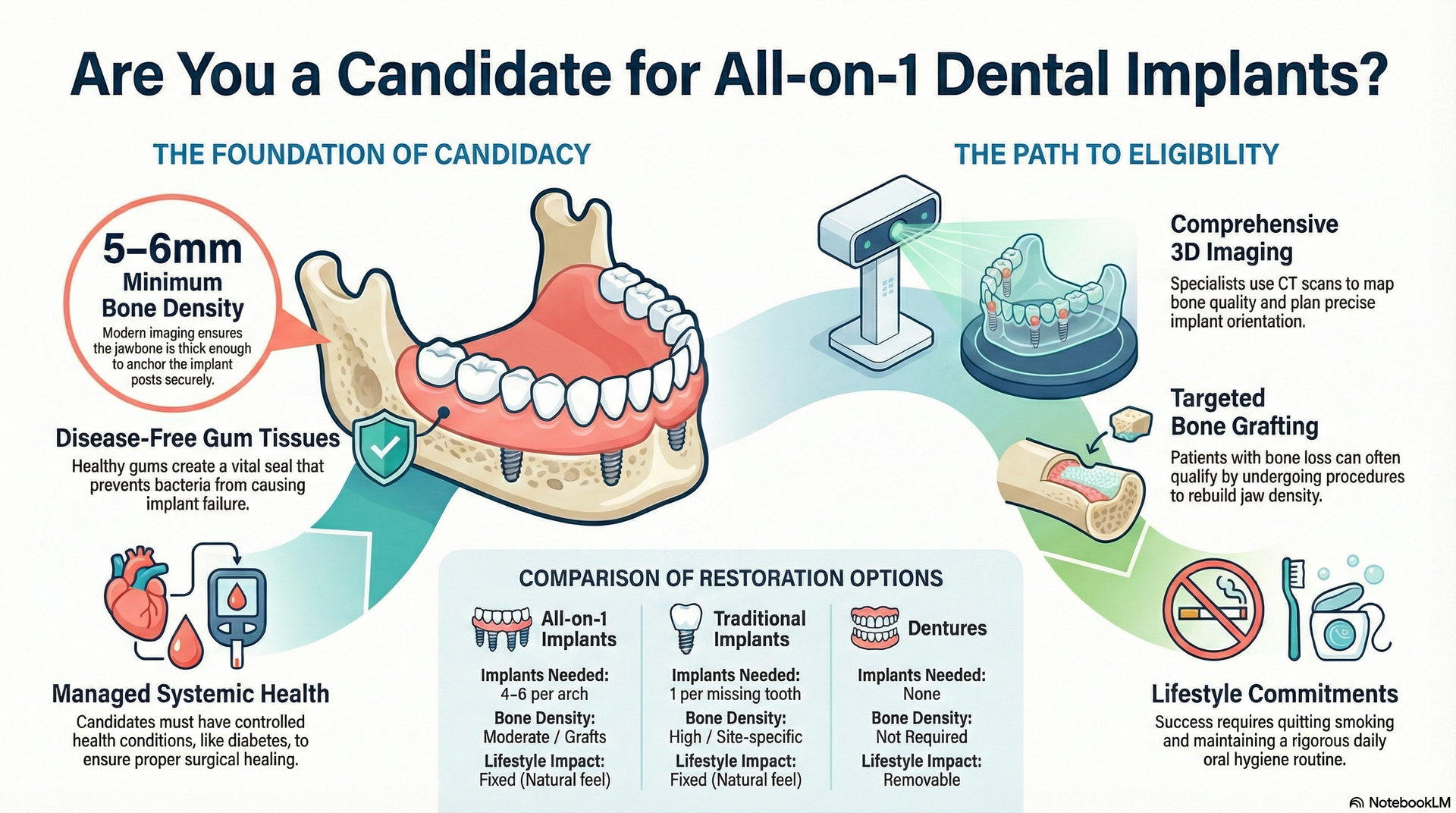
Wondering if All-on-1 implants are right for you? Discover the key factors that determine candidacy and why understanding this can transform your smile and confidence. With the right information, you can take the first steps toward a healthier, more vibrant life. Ready to find out if this revolutionary dental solution fits your needs? Let’s dive in and help you decide if you’re a strong candidate for All-on-1 dental implants.
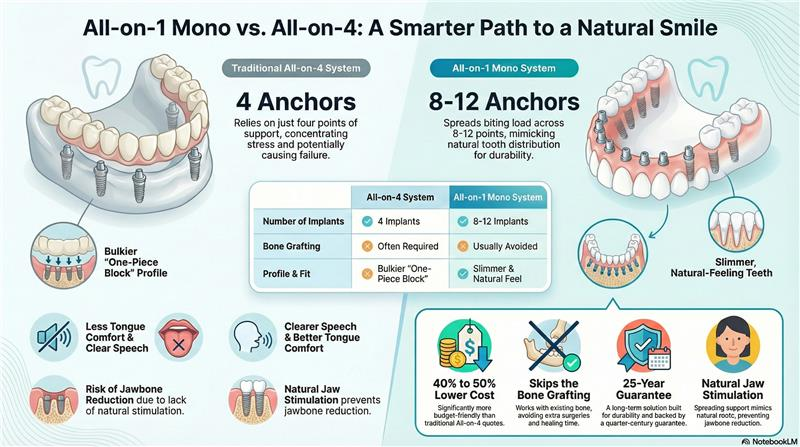
Why did another dentist say I need All-on-4 instead?
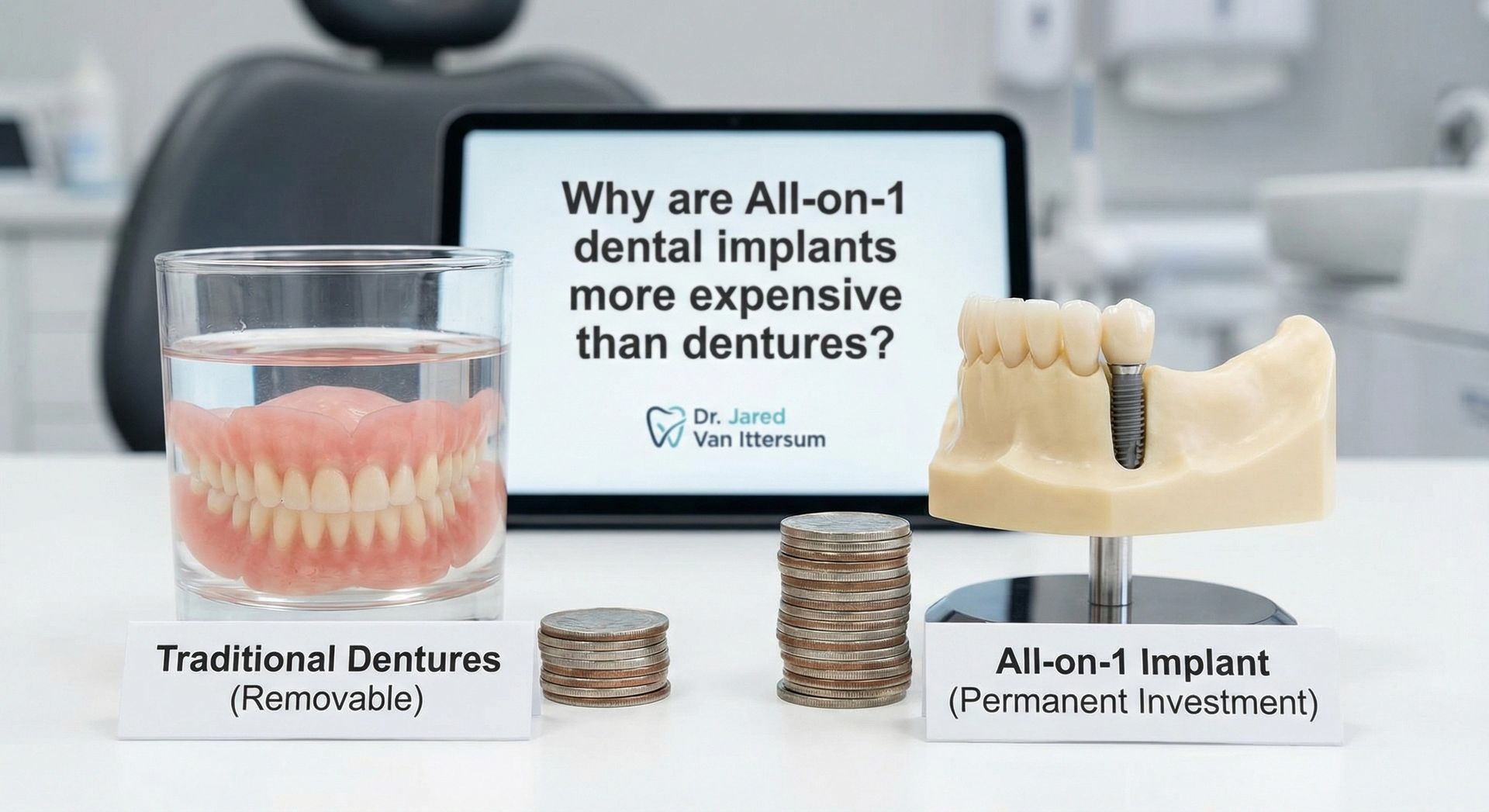
Ever wondered why All-on-1 dental implants cost more than dentures? Understanding the reasons behind this price difference can help you make informed choices about your oral health and long-term investment in a confident smile. In this comprehensive guide, you'll learn precisely what goes into the price tag for these two popular tooth replacement methods. We'll explore cost breakdowns, the impact of advanced technology, surgical complexity, material differences, and what all this means for your smile, comfort, and wallet over the long run.